

Driving Financial Technology Innovation in Georgia’s Transaction Alley

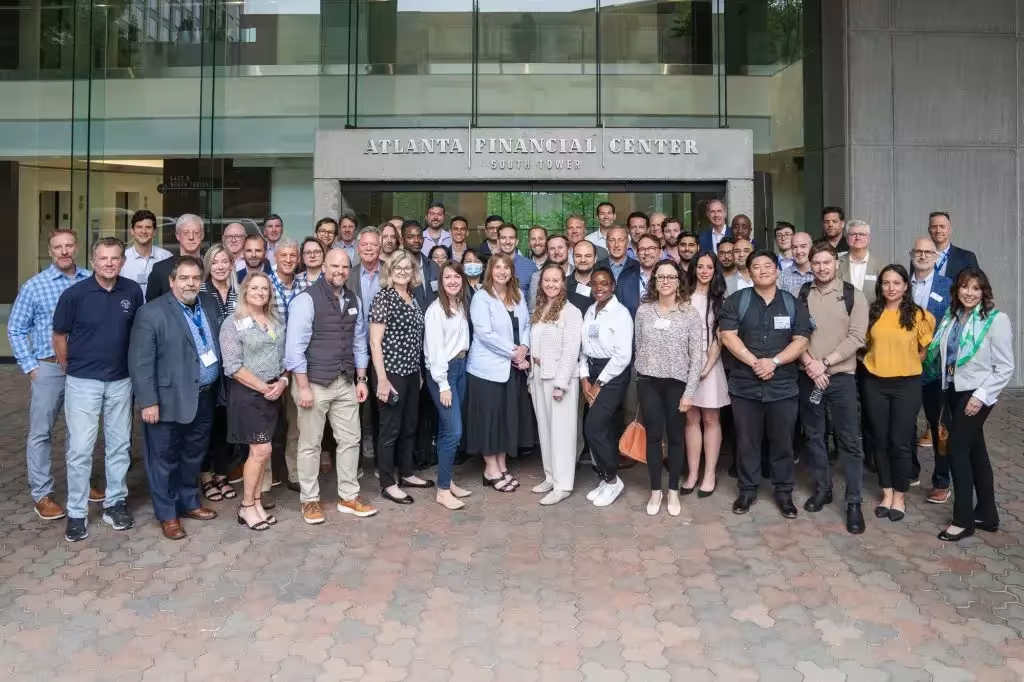
FinTech is one of Georgia’s strongest industries, with over 200 companies generating more than $72B in annual revenue. Roughly 70% of all U.S. financial transactions flow through companies headquartered here in “Transaction Alley,” and 60% of the sector’s players are clustered in metro Atlanta. This concentration makes Georgia a global leader, and ATDC is strategically aligned to accelerate FinTech technology innovation, where the state already excels.
But building a FinTech company is hard. Strict regulations, complex integrations with banks and processors, and the need for credibility create high barriers for FinTech startups. Every innovation in payments, lending, or digital banking impacts millions of people and billions of dollars, making trust and compliance essential.
ATDC’s dedicated FinTech startup vertical lowers those barriers. By embedding founders into Georgia’s payments ecosystem, which already processes 70% of U.S. transactions, we help startups test, validate, and commercialize solutions faster.
FinTech Companies: Shaping a Smarter, More Inclusive Financial Future
FinTech startups are redefining how society interacts with money. By removing friction from payments, lending, and access to capital, they make financial services faster, more affordable, and more transparent. This benefits everyone, from small businesses getting paid quickly to families sending remittances at lower costs, and unbanked individuals gaining access to the formal economy.
On the industry side, FinTech innovation pushes banks, processors, and regulators to modernize, creating a more efficient, secure, and resilient financial infrastructure. Startups act as the “R&D labs” for financial services, driving change that incumbents might otherwise resist. The ripple effects are enormous: broader financial inclusion, stronger trust in financial systems, and new standards for how money moves in a digital world.
ATDC has three levels of programs for startups: Educate, Accelerate, and Signature, with Accelerate and Signature having industry-specific opportunities.


Work Where Financial Technology Builds Trust at Home and at Work. Rent Office Space at ATDC.
Why settle for typical co-working spaces when you can join a thriving hub of financial technology innovators? At ATDC, you’ll find affordable workspace surrounded by cutting-edge FinTech startups, access to Georgia Tech’s top-tier business and engineering talent, and a collaborative ecosystem driving the future of digital payments, financial security, and smart banking solutions.
Details
Benefits
- Be around like-minded people
- Have your catalyst close by
- Tap into Georgia Tech students, faculty, and researchers
- Engage with technology-related talent
- Limited access to ATDC spaces, such the design studio and AI lab
Features
- 50+ office suites ranging from 500 to 1,500 sq ft
- 10 single and double offices ranging from 138 to 597 sq ft
- Subsidized rent, which also covers utilities, Georgia Tech’s high-speed wireless internet, office furniture, company logo on suite door
- Ability to book conference rooms and rooftop area at no additional charge
- Georgia Tech perks, including access to campus transit, dining facilities, sporting events, discounted rates at the Georgia Tech Hotel and Conference Center, and the opportunity to join the Campus Recreation Center.


Meet ATDC’s FinTech Startups
From a FinTech startup that helps CFO’s forecast cash, revenue, and expenses to a company that developed an expense management platform to take the financial friction out of family caregiving, ATDC’s startups are developing financial technology solutions for companies, individuals, and families that are changing how they manage their expenses in the office and at home.
Frequently Asked Questions
Do I need a license to launch a FinTech Startup?
Yes – if you’re moving money, lending, or storing funds, then you would need a license. Most early FinTech’s partner with a sponsor bank first to operate while building scale.
What compliance areas should I prioritize first?
We recommend starting with AML/KYC, data security, and fraud prevention, as regulators and banks expect these from day one.
How fast do regulations change?
Regulations change very fast. Emerging areas like crypto, AI, and open banking are constantly evolving. Founders need ongoing compliance support, not a one-time fix.
Why is consumer trust so critical in FinTech?
Consumer trust is critical to FinTech since you are dealing with people’s money. One security breach or outage can permanently damage your reputation.
How can a startup afford strong security?
To afford strong security, make sure it’s part of your startup’s architecture by leveraging cloud providers, vendor tools, and outsourced expertise early.
What’s the biggest risk to my FinTech company’s reputation?
Data breaches or fraud are the biggest risk to a FinTech company. Transparency and reliability are as important as product innovation.
What certifications or audits do we need?
The most common certifications and audits that you will need include SOC 2, PCI DSS, and ISO 27001. These build trust with banks and enterprise customers.
What is a sponsor bank, and do I need one?
A sponsor bank provides regulatory oversight, allowing you to launch without obtaining your own license. A majority of FinTech’s will partner this early into their startup venture.
How long do partnerships with banks take to set up?
It can take anywhere from nine to 24 months for enterprise-level deals with a bank.
How can I connect with financial institutions faster?
To connect with financial institutions faster, having the right connections is key. Joining programs like ATDC or other accelerators with a FinTech focus will provide introductions and trust.
Should I build my own payments infrastructure?
Initially, instead of building your own payment infrastructure, start with partnerships/APIs (Stripe, Marqeta, Synapse, Unit) to launch quickly. Developing your own can always come at a later point in time.
What type of talent is most critical early on?
Beyond engineers, consider hiring or contracting compliance and risk experts. They’ll help you avoid costly missteps.
How do I strike a balance between startup speed and bank conservatism?
Communicate clearly, document everything, and adopt a “compliance-first” culture, as this will build trust with slower-moving partners.
What’s the biggest operational mistake FinTech companies make?
Treating compliance as an afterthought is the biggest operational mistake a FinTech company. If you ignore it early, you’ll hit walls with regulators, banks, and investors.
How do I pick vendors I can trust?
Choose providers with proven financial service customers and insist on due diligence (audits, certifications, references).
Resources for FinTech Startups



Financial Technology Stories

ATDC Receives Visa FinTech Investment for Financial Technology Innovation
Visa’s Investment to Accelerate FinTech Innovation ATLANTA - Today, the Georgia Institute of Technology’s Advanced Technology Development Center (ATDC) announced a new three-year financial commitment by Visa, the world…